Tuesday, May 07, 2013

A Partial Eclipse by Martin Boyce

My review of A Partial Eclipse by Martin Boyce (MACK, 2013) is now available on photo-eye. You can get the book here.
_____________________________________________

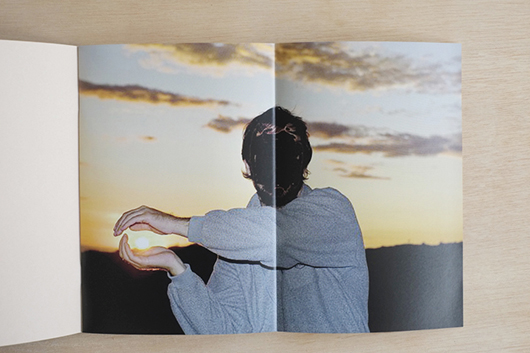
It begins with an encounter in a museum, ruins and a stolen camera. The images aren't entirely gone. They've just gone somewhere else. Perhaps already deleted. Fading from memory. Martin Boyce's gorgeous book, A Partial Eclipse, begins with a story of loss and confusion, and leads us through an archive of images that cycle between the natural and constructed, offer glimpses of the past, but also point forward. The haunting spaces and subjects of Boyce's photographs teeter between asserting their structural integrity and succumbing to the forces of nature and entropy, collapsing and at last disappearing into the landscape, yet offering hope and possibility.

All images © Martin Boyce and MACK

Boyce is perhaps best known for his sculpture and installation work, which won him the Turner Prize in 2011. Drawing upon early 20th century modernist design, architecture and sculpture, his work incorporates text, sculpture and light. His 2010 Turner prize nominated show, 'A Library of Leaves,' included numerous works that were derived in part from Joel and Jan Martel's 1925 concrete tree sculptures from the Exposition des Artes Décoratifs in Paris of that same year. Although subsequently destroyed, maquettes and photographs of the work survived. Repeatedly mining the Martel's work, Boyce has teased out motifs and options within the work arriving at his own unique vision. For a photographic audience unfamiliar with his work, this information provides important insight and context to his work and the book. Boyce is clearly drawn to ruins, monumental architecture and decorative architectural elements. Edited and selected from a large personal archive of images, the murky and foreboding photographs in this new book do not seem radically dissimilar from his other non-photographic work. Like his sculptural work, they are elegiac and cautiously hopeful. The look backward is not merely nostalgic, but is rooted in a desire to reclaim lost possibilities from the past.  

All images © Martin Boyce and MACK

Aside from the opening story, which frames the images, the photographs don't provide any narrative. Instead, they feel like sketches for the artist or the hazy, partially forgotten and lost images from the protagonist's stolen camera. Concrete stairwells lead to cracked tile floors and graffiti carved tropical plants languish under the noon sun. Palm trees sway forlornly in the wind. Empty gardens and pavilions take us to ruined steps. Decoratively patterned grates, doorways and windows cast mysterious elliptical shadows – each a threshold that both frame our relationship and experience of the space, but also delineate the space itself. Although likely taken at a variety of different locations, one has the sense that the photographer stumbled through an abandoned villa at dusk. Like a harried surveyor or speculator, he's captured the details of the space that suggest its former glory, but also reflect the photographer's own melancholic state – mournful of what is lost, capturing what remains and pointing to new possibilities.

All images © Martin Boyce and MACK

Although not overtly lavish in size or scope, it is worth noting the extraordinary reproductions in the book. Printed on a double-sided paper, the small glossy photographs resemble fine inkjet prints or Cibachromes. The subtle dark tones of the images are handled beautifully and allow the viewer to peer deeply into the shadows. The backside of each image is a light matte green. The somber green tones matches the dark images and ties the work to the peripheral vegetation and nature seen throughout. Moving through the book, the pages alternate between facing photographs, glossy photos facing matte and facing matte pages. There aren't a lot of photographs, but the stunning reproductions command attention and close scrutiny. Initially unassuming, the book is a beautiful object.

All images © Martin Boyce and MACK

As a recent press release for a 2011 exhibition states, "Boyce['s work] makes specific reference to the ghost of Modernism as it haunts the public urban and architectural landscape."* Any effort to reference and pay homage to modernist architecture and design of the early 20th century must also acknowledge its own elegiac nature. It must recognize that the dreams of modernism are distant, and demarcate what, if anything, we hope to recover. Perhaps the title, A Partial Eclipse, is a recognition that these faded visions are not forgotten, whilst also granting that the past can be recovered, reclaimed, re-explored and made present and new.

Please note: This review originally appeared May 6th, 2013 on photo-eye You can get the book here.

Thursday, May 02, 2013

Backwards and Forwards by David Campany

Normally, I try not to reblog anything, but I wanted to make an exception for a recent piece by David Campany. The short essay appears on Still Searching, the Fotomuseum Winterthur's excellent blog. Campany is currently their visiting blogger. The whole post is great, but I was particularly struck with the end.
The discourse of photography has a habit of seeing its own present problems as unique, and its own moment as the most intellectually nuanced and radical. This failing leads it to underestimate continually the sophistication of its past, and to see itself as entirely separate from it. I am reminded of a suggestive and elegant reply Umberto Eco once made to the question about the merits of study:

"We often have to explain to young people why study is useful. It’s pointless telling them that it’s for the sake of knowledge, if they don’t care about knowledge. Nor is there any point in telling them that an educated person gets through life better than an ignoramus, because they can always point to some genius who, from their standpoint, leads a wretched life. And so the only answer is that the exercise of knowledge creates relationships, continuity and emotional attachments. It introduces us to parents other than our biological ones. It allows us to live longer, because we don’t just remember our own life but also those of others. It creates an unbroken thread that runs from our adolescence (and sometimes from infancy) to the present day. And all this is very beautiful."
Umberto Eco, “It’s not what you know …” The Guardian, April 3, 2004
Read the entire piece here, as well as Campany's other recent entries.

Sunday, April 28, 2013

Casa De Campo by Antonio M. Xoubanova

My review of Casa De Campo by Antonio Xoubanova (Mack, 2013) is now available in the latest issue of afterimage (Vol. 40, No. 6).

Here's a little preview:

It has been speculated that if New York City’s Central Park were to vanish, the city would quickly wither and die. Like any good city park, it is the heart of the city and a critical salve for urban life. One of Europe’s largest public parks, Madrid’s Casa de Campo occupies an enormous stretch of land to the west of the city. A former royal hunting estate, the land was first opened to the public during Spain’s Second Republic in 1931. Closed to traffic, the vast woodlands and fields offer a welcome respite from urban life, the pervasive concrete, and crowds. Yet despite being carefully zoned and managed, parks are never fully controlled. They all contain unruly pockets and spaces free from municipal oversight. In Casa De Campo, Antonio Xoubanova has strayed far from the manicured and sanctioned spaces of the park to explore its interior and the spaces that have given way to more personal and private rituals. Divided into five unpaginated sections, exploring “love, death, fleeting moments, symbols and a lack of direction,” Casa De Campo offers an affecting and idiosyncratic portrait of the secret life of a park.

You can read the rest of the review, which is entitled Park Life, in the issue, along with some other great pieces. Get a copy of the book here.


 All images © Antonio Xoubanova and MACK
 All images © Antonio Xoubanova and MACK
 All images © Antonio Xoubanova and MACK
 All images © Antonio Xoubanova and MACK
 All images © Antonio Xoubanova and MACK

Thursday, April 25, 2013

Passengers by John Schabel


My review of Passengers by John Schabel (Twin Palms, 2012) is now available on photo-eye. You can get a copy of the book here.
_________________________________________

From the relatively new fear of terrorist attacks and catastrophe to the maddening inconvenience of flight delays and endless security lines, commercial air travel elicits a combination of fear, frustration and tedium. Nevertheless, flight is miraculous. As a technical achievement, it is as marvelous to contemplate, as it is convenient. While documenting and conveying the complex emotional and psychological effects of travel is particularly challenging, it is not impossible. John Schabel's evocative new book, Passengers, collects a series of portraits of people shot through the windows of airplanes waiting to take off on the runway. Elegantly restrained in both design and concept, Schabel's book powerfully captures the tedium and vulnerability of modern air travel.

It is hard not to look at Schabel's work and read it against the backdrop of post-9/11 air travel. An impossible project in today's world, Schabel photographed his subjects in the mid-90s at various airports in the United States as they awaited take off. Shot with a long telephoto lens far from the tarmac and closely cropped to the windows, the photographs give us an intimate look at each passenger. Mostly shot at night, and often during inclement weather, each window frames the person and seems to glow. Like an illuminated screen, the windows offer a voyeuristic peek at the waiting passengers. Shielded behind thick glass, the faces are obscured by rain and incidental reflections. Most are distracted and sit patiently, quietly reading newspapers or books. Others are turned to their travelling companion or are already fast asleep. Some peer out the window to meet our gaze or simply contemplate the journey ahead. In one image, a woman with large framed glasses looks out the window, her expression both startled and afraid. In another poignant image, a small boy raises his hand to touch the window – reaching out to the photographer and us, waving goodbye.

All images © John Schabel and Twin Palms
  
Passengers and modern travel have a rich history in photography. Among contemporary photographers, Michael Wolfe's images of torturously compacted Japanese subway commuters strike a similar vein – albeit in a more brutal manner. Alternatively, Andrew Bush's Vector Portraits offers an amusing twist on cars and their drivers – each passing window framing their idiosyncratic personalities and offering a glimpse into their mobile world. However, the most obvious touchstone is Walker Evans' seminal book and series Many Are Called. In this work, Evans surreptitiously photographed fellow subway travelers in NYC through a hole in his trench coat. Tired and guarded, Evan's fellow commuters slowly make their way to work or journey home below the city. Both Evans and Schabel capture resigned tedium and vulnerability of modern travel – be it the New York City subway or modern air travel. Forced into close proximity to our fellow passengers and trapped inside, we must all surrender to the plane or train that carries us.
 

All images © John Schabel and Twin Palms
  
There is a curious phenomenon that occurs on airplanes. Hovering above the world, protected only by metal and glass, our emotional fragility is laid bare. Forced to watch a limited selection of movies on our tiny screens, even the worst Hollywood treacle can cause us to cry. Faced with our own mortality, defenses drop. Will we make it? Why did the seatbelt light go on? Trapped in a narrow seat, we have nowhere to go. There are no tears in Schabel's images, but he does capture the coerced fragility and state of surrender. The hope that the plane will take off, land and arrive safely, that the miracle of flight will hold true if just one more time.  

All images © John Schabel and Twin Palms

Twin Palms and Schabel have taken a long time putting this book together and it shows. Although seemingly simple in design, the spare elegance of the design allows the work to shine. As the illustrator, graphic designer and author Christoph Niemann recently wrote, "Simplicity is not about making something without ornament, but rather about making something very complex, then slicing elements away, until you reveal the very essence."* In this sense Schabel's book and images does exactly what it should and no more. The book contains no explanatory or self-justifying text and instead presents each image almost full-bleed on the page – sometimes facing another image, and other times by itself and facing a black page. Moving through the book, one has the sense of scanning the horizontal rows on windows on a taxiing plane. As distant observers, we can only watch, knowing we are all travelers at some point - alone, surrounded by fellow travelers and waiting to depart.  

All images © John Schabel and Twin Palms

Please note: This review originally appeared on photo-eye on April 22nd, 2013. You can get the book here.

Wednesday, April 24, 2013

10x10 American Photobooks

I'm happy and honored to be included in the 10x10 American Photobooks project created by Matthew Carson
, Ihiro Hayami, 
Russet Lederman and 
Olga Yatskevich

. The project includes a book, a forthcoming exhibition in Tokyo and an online presence. Shiori Kawasaki and 
Victor Sira

 of bookdummypress are designing and printing the book, which should be available soon. You can pre-order a copy of the resulting book here. It looks great and will have a lot of additional contributors, as well as numerous essays.

As part of the online presence, Olia and Russet asked me to select ten lesser-known, independent and self-published photobooks from the past twenty-five years. A daunting task. I've roughly adhered to at least three of these criteria, but quickly became overwhelmed in trying to go back twenty-five years. In making my selection, I tried hard to pick books that were not recognized classics (yet), had not received the Badger/Parr seal of approval and had not been showered with too many accolades. Sadly, ten is never enough, especially when there are so many good books.

STATEMENT:

Who needs photobooks? Let alone another list. No photobook is truly essential to life or happiness, although any lover of them will beg to differ. While a few books often get rightful accolades, there are also many that sit quietly on the shelf, alone, improperly shelved, remaindered and unsold, waiting to be discovered. Decidedly idiosyncratic and personal, I tried to highlight lesser known books that deserve a wider audience – ones you may have forgotten, heard about on a blog, never heard of, hated and still don’t like, couldn’t afford, one you can’t even see, but just might be willing to look at again and see with fresh eyes.

•  Shannon Ebner, The * as Error (LACMA, 2009)
•  Michael LundgrenTransfigurations (Radius, 2008)
•  Justin James Reed, 2013 (Horses Think, 2012)
•  Susan Lipper, Trip (powerHouse, 1999)
•  Penelope Umbrico: Photographs (Aperture, 2011)
•  Pierre Le HorsFirework Studies (Hassla, 2010)
•  Alison DaviesOuterland (Charles Lane Press, 2010)
•  Monica HallerRiley and His Story: Me and My Outrage, You and Us
    (Onestar Press, 2011)
•  Raymond Meeks and Wes MillsNot Seen | Not Said (Silas Finch/Orchard, 2011)
•  John Gossage, HERE...Half Blind (Rochester Art Center, 2010)

The NYC Preview for 10x10 American Photobooks is scheduled for 3-5 May, with the opening reception on Friday, 3 May 2013 from 7 to 9. The event will take place at Ten10 Studios in Long Island City (10-10 47th Road, Long Island City, NY 11101).

You can pre-order a copy of the resulting book here.

Sunday, April 21, 2013

Visual Studies Workshop - Summer Institute (7/6-7)

I'm excited to announce that I will be teaching a workshop on photobooks this summer at the Visual Studies Workshop as part of their Summer Institute. I had the great please of speaking at 2012 Photo-Bookworks Symposium last summer, so I'm excited to return to Rochester.

If you're interested in the class or any of the other cool classes they're offering, you can register here.

Wednesday, March 20, 2013

The Unphotographable (Fraenkel Gallery)

 
My review of The Unphotographable (Fraenkel Gallery, 2013) is now available on photo-eye. You can get the book here.
__________________________________________ 

Despite its complex indexical nature, photography allows us to document and record the world unlike any other medium. However, the lens not only captures, but also transforms the world around us. It makes visible things and phenomena both seen and unseen. The unique, alchemical quality of photography to reveal and transform its subjects is one of its chief delights. The Unphotographable, the latest anthology and catalog by the Fraenkel Gallery, gathers together a collection of vernacular, scientific and artistic images that all in one way or another attempt to capture what lies outside the power of the lens.

From one of Alfred Stieglitz's famous Equivalents to a vernacular image that captures what appears to be Christ's profile in the branches of a lakeside tree, the book gathers together a diverse and striking collection of images. Although the various photographers' motives vary, the images almost all (intentionally or unintentionally) capture the seemingly unphotographable or unseeable. As Jeffrey Fraenkel states in his introduction, these subjects include but are not limited to "thought, time, ghosts, god, [and] dreams." Like Fraenkel's previous anthologies (i.e., Furthermore, The Eye Club, The Book of Shadows and others), the book demonstrates Fraenkel and his gallery's great eye and unique ability to gather memorable images from a variety of different photographic sources. 

All images © artists and Fraenkel Gallery

In naming the book The Unphotographable, they are also being playfully ironic. While the photograph's nominal subjects may be 'unphotographable,' the results are purely photographic. From the ghostly apparitions of double exposures to the mystical evanescence of long exposures, photography can capture the world in ways ripe with metaphorical possibilities that point beyond its literal roots. As Fraenkel notes, "photography's paradoxical ability to render the immaterial and evanescent have been acknowledged since its earliest days." This ability, coupled with our own desire to capture phenomena that lie outside our perception, has long been an important aspect of the medium and its history.  

All images © artists and Fraenkel Gallery  
All images © artists and Fraenkel Gallery

Fraenkel's book is not the first to explore this topic. Tucked in the back of the book, Fraenkel acknowledges its debt to two recent museum shows – The Perfect Medium: Photography and the Occult (MET, 2005) and Brought to Light: Photography and the Invisible (SFMoMA, 2008). Each addressed photography's relationship to the immaterial, both real and unreal, and play an important role in fleshing out this history. Present since its invention, images like these have tested the boundaries of photography and complicate any simplistic understanding of photography as a mere recording device. Although not as focused as these two previous shows and books, and lacking the institution weight usually associated with large museums, The Unphotographable is nevertheless a welcome addition to this rich history and contains a host of wonderful images.  

All images © artists and Fraenkel Gallery

 The book is beautifully designed and has a wonderful trompe l'oeil image of the book on its own cover. While it contains numerous fantastic photographs from artists like Liz Deschenes, Chris McCaw, Adam Fuss, Paul Graham and others, as is often the case, it is the older scientific, vernacular and lesser-known images that really shine. In one untitled vernacular image from 1935, a giant flame shoots up into the darkness illuminating an ominous sign that states – "Trespass with or without permission at your own risk." Another image from 1895 by Jakob Ottonowitsch, entitled Spark captured on the surface of the body of a well-washed prostitute, records a spark of electricity that resembles a shimmering amoeba. An already fantastic image rendered all the more surprising and strange by its perplexing and unbelievable title. Although not a new strategy, the mingling of vernacular and scientific images with intentionally artistic images creates a surprising and rich dialog that highlights the generosity of the medium.

All images © artists and Fraenkel Gallery

Photography has always flirted with and tested its own representational boundaries. As this collection attests, when the alchemical magic of photography intersects with our own desire to test the limits of what we can see and make visible, the results are often astonishing. But, as the aforementioned sign suggests, it can be dangerous and scary territory. We may not always give ourselves permission, but if we can't see it, what's there to be afraid of

Please note: This review originally appeared on photo-eye on March 18th, 2013. You can get the book here.